

News
Death of Charles Aznavour (October 1, 2018)

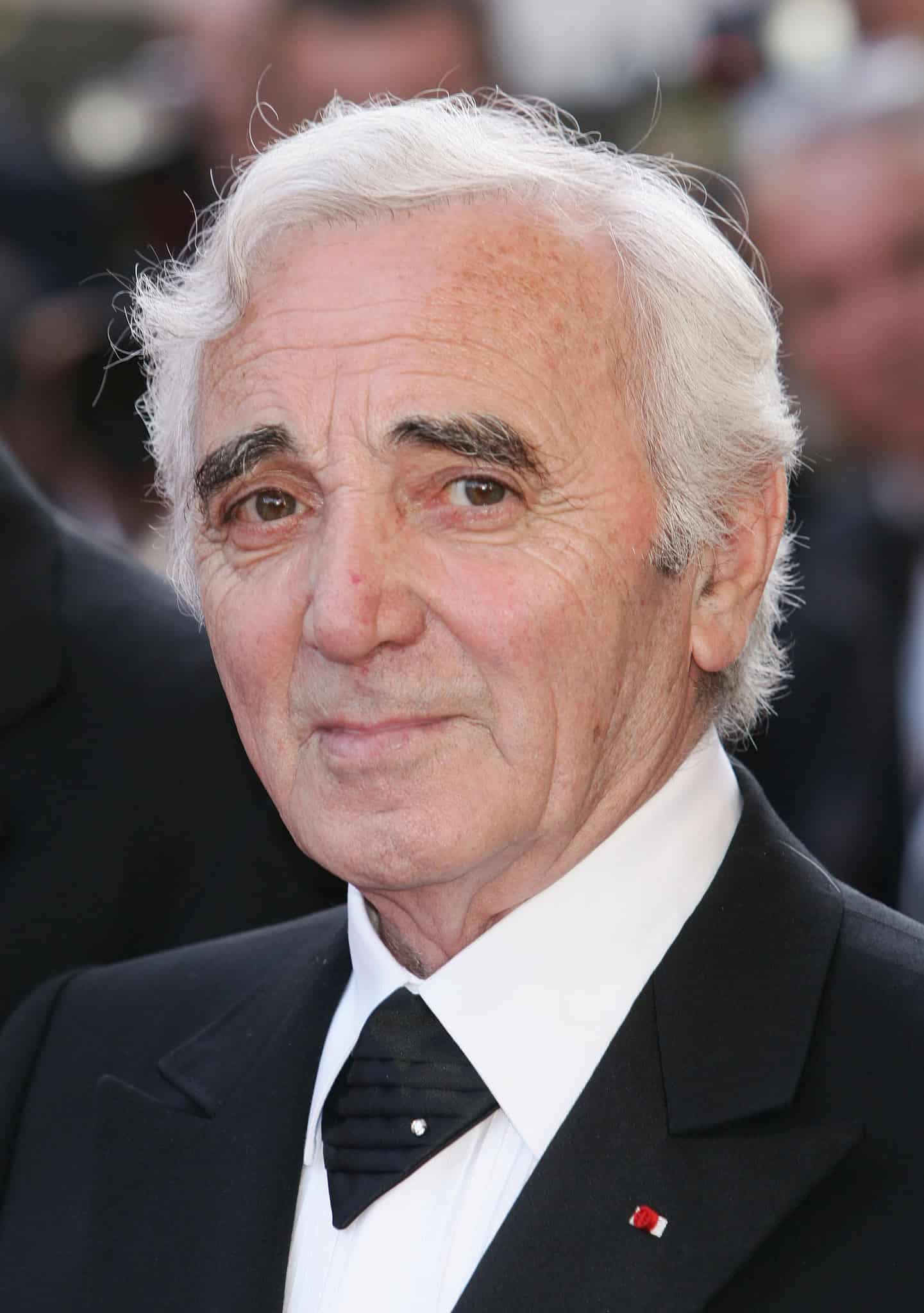
Statues, parks, and special coins in France, Armenia, and other countries have remembered French Armenian chansonnier Charles Aznavour since his death in 2018, including a monument built in Stepanakert (Republic of Artsakh) in 2021 in front of the cultural center named after him, which has become a victim of Azerbaijani vandalism after the forced evacuation of Artsakh in 2023. He recorded more than 1,200 songs in various languages and wrote or co-wrote more than 1,000 songs, which made him a familiar name worldwide
Charles Aznavour was born Shahnour Vaghinak Aznavourian in Paris on May 22, 1924. His parents ran a small Armenian restaurant until the Depression. Encouraged by them, he danced, played the violin, sang and aspired to act. He got work as a film extra from the 1930s onwards and in 1941 joined the Jean Dasté dramatic troupe. He adopted Charles Aznavour as his stage name and during World War II formed a partnership with singer-composer Pierre Roche and gained experience writing lyrics and in cabaret. In the postwar years they went on tour with Edith Piaf around France and in the United States and Canada, but split up when Roche married. Piaf advised him to pursue a career in singing.
Aznavour wrote songs for artists including Piaf, Gilbert Bécaud and Juliette Gréco, and in the 1950s began to have some success in his own right, first in France and then internationally. By the early 1960s he was able to sell out Carnegie Hall in New York. He appeared in films such as Young Have No Morals (1959) and The Keepers (1959). By the time he made Testament of Orpheus (1960), he was a star. After his acclaimed performance in Shoot the Piano Player (1960), he starred in American and British films including Candy (1968) and And Then There Were None (1974), an Agatha Christie adaptation, and in the Oscar-winning German drama The Tin Drum (1979).
He wrote or co-wrote musicals, more than one thousand songs, and recorded ninety-one studio albums. Aznavour’s voice was shaded towards the tenor range, but typical features of a baritone contributed to his unique sound. He spoke and sang in many languages and recorded one song from Sayat-Nova, an Armenian-French song with Bratsch, and the popular song Im Yare. Que c’est triste Venise, sung in five languages, was very successful in the mid-1960s. His song She, his greatest international hit, topped the British charts in 1974.
A long roster of artists recorded Aznavour’s songs and collaborated with him, including Edith Piaf, Fred Astaire, Frank Sinatra, Andrea Bocelli, Bing Crosby, Ray Charles, Bob Dylan, Liza Minnelli, Elton John, Dalida, Josh Groban, Tom Jones, Shirley Bassey, José Carreras, Nana Mouskouri, Julio Iglesias among others. French pop singer Mireille Mathieu sang and recorded on numerous opportunities with Aznavour.
The singer continued performing until months before his passing all over the world. In his final years he would still sing in multiple languages, but typically he would stick to French and English, with Spanish or Italian being the third during most concerts. He performed for the last time in September 2018 in Japan, weeks before his death.
Aznavour was married to Micheline Rugel (1946), Evelyn Plessis (1954) and his widow, Ulla Thorsell (1966), and had six children: Seda, Patrick, Katia, Mischa, Charles, and Nicolas. He was well known for being a lifelong and active supporter of civil rights, fighting for equality among all races, religions and nationalities as he stated in many of his interviews during his lifetime.
The singer, who had authored Ils Sont Tombés (They Fell in English), a song premiered in 1975 on the 60th anniversary of the Armenian Genocide, with Georges Garvarentz, his brother in-law and co-author, stood up for Armenia following the earthquake of December 1988. He wrote the song Pour toi, Arménie (For You, Armenia), which was performed by a group of famous French artists and topped the charts for eighteen weeks, and established his charity Aznavour for Armenia. In 1995 he was appointed ambassador and permanent delegate of Armenia to UNESCO. He was a member of the Board of Trustes of the Armenia Fund. In 2002 Aznavour appeared in Atom Egoyan’s film Ararat playing the role of French filmmaker Edward Saroyan. He received the title of National Hero of Armenia in 2004 and Armenian citizenship in 2008. He held the mostly ceremonial title of French ambassador-at-large to Armenia and agreed to hold the position of Armenian ambassador to Switzerland in 2009.
He earned major French, Armenian, Belgian, Canadian, and Japanese decorations, as well as many honors, including the American Society of Songwriters Award (1969), induction into the Songwriters Hall of Fame (1996), and a star on the Hollywood Walk of Fame (2017). In 2017, he and his sister Aida Aznavourian-Garvarentz were awarded the Raoul Wallenberg Award for sheltering Jews during World War II.
Aznavour passed away on October 1, 2018, at his home in Mouriès at the age of 94. He was honored with a state funeral Les Invalides in Paris with a eulogy delivered by French president Emmanuel Macron. He was buried in the Montfort-l’Amaury cemetery.