

News
HOW DID THE HOLY MARTYRS OF 1915 BECOME THE FIRST ARMENIAN SAINTS SINCE THE 15TH CENTURY?

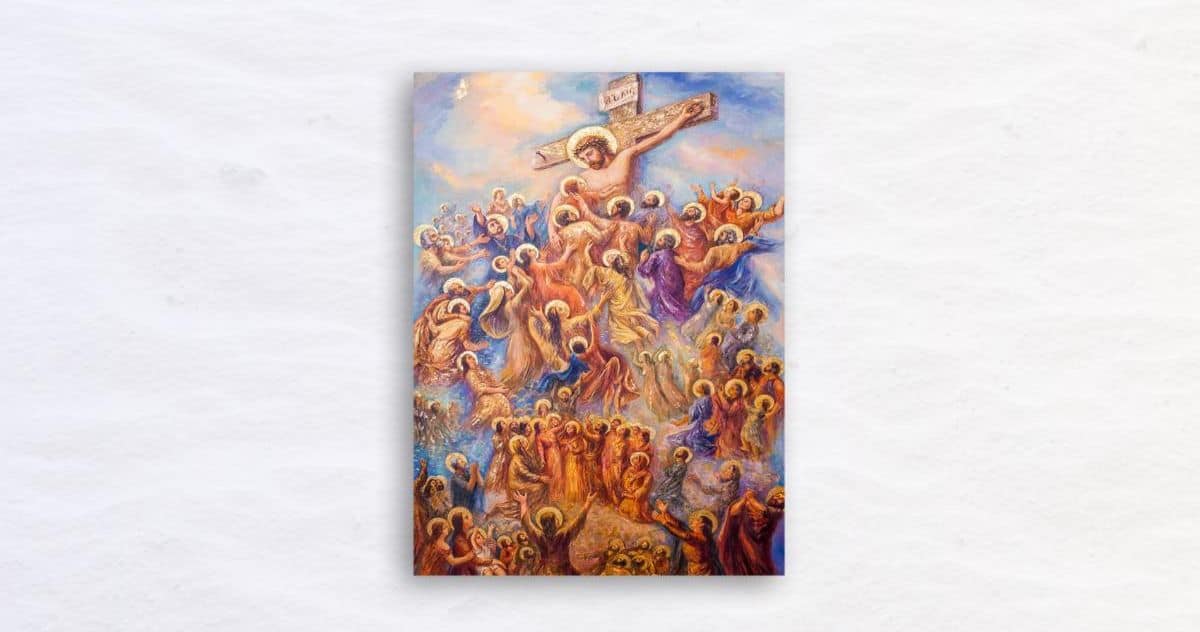
The canonization of the martyrs of the Armenian Genocide on April 23, 2015, was a turning point for the Armenian Church. Until then, the last saints had been Hovhan Vorodnetsi (1315-1386) and Gregory of Datev (1346-1409), who were probably included among the saints of our Church in the liturgical calendar compiled and printed in 1774 by Catholicos Simeon I Yerevantsi.
For the April martyrs, the canonization committee of the Armenian Apostolic Church, established in 2005 with the blessing of His Holiness Aram I, Catholicos of the Great House of Cilicia, and His Holiness Karekin II, Catholicos of All Armenians, was formed for the restoration of the rite of canonization and especially for directing the work connected with the canonization of the victims of the Armenian Genocide. The principle of collective canonization was adopted for the 1915 martyrs.
Unlike the Catholic Church, the Armenian Church did not have clear regulations for canonization, or none has been found to this day. Before the canonization of the April martyrs, two paths can be identified from historical examples in the tradition of our Church:
- Popular recognition, expressed through the spontaneous veneration of the people and the organization of pilgrimages.
- Ecclesiastical recognition, which in turn is divided into two branches: local ecclesiastical recognition and universal recognition by the central church authority. Both approaches may take place separately or they may concur in the canonization of any saint. Archbishop Zareh Aznavourian (1947-2004) has noted: “A number of saints have entered the Synaxarion by individual initiative and have thus become the object of celebration for the entire Church.”
It is worth recalling here that the feast of Sts. Vartanantz is the most important precedent of collective canonization in the history of our Church. It is dedicated to the memory of General Vartan Mamigonian and the 1,036 heroes martyred in the Battle of Avarayr on May 26, 451.
It is interesting to note, however, that in the course of our history there have been other cases of collective canonization that are no longer commemorated. An Armenian-Persian war took place in 339 or 340, following which, for the first time in our history, a Church Patriarch—Catholicos Vrtanes I Bartev—proclaimed as saints the warriors who had fallen for our faith and our homeland, and immediately established a feast. Likewise, Catholicos Hovhannes IV Ovayetsi instituted an annual feast in memory of the Adomian martyrs, around 150 young men martyred in Dvin in November 853 by being chained, imprisoned, and tortured.
With the canonization of the Holy Martyrs of 1915, our Church has already adopted a new set of rules to guide the proclamation of saints. This also presupposes, among other things, the anointing of an icon, the censing of relics, the chanting of a sharagan (hymn) dedicated to the given saint or saints, and an intercessory prayer. For the martyrs of the Armenian Genocide, the magnificent sharagan “Hrashatsan” (“They Became Wondrous,” but usually rendered as “The Hymn of the Holy Martyrs” in English) composed by Archbishop Zareh Aznavourian of the brotherhood of the Great House of Cilicia, was adopted as the canon.