

News
“WE BELIEVE”: EXPLORING THE NICENE CREED AT ST. SARKIS


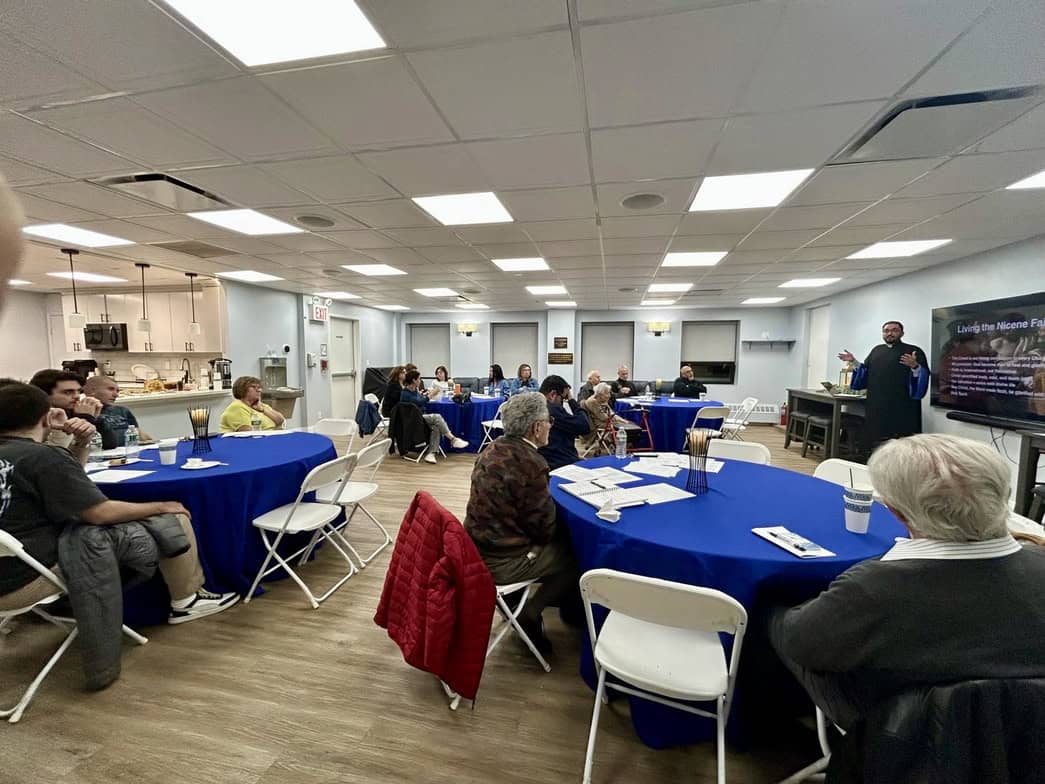
On Tuesday, October 21, St. Sarkis Church in Douglaston, New York, launched a three-lecture series entitled “The Power of ‘We Believe’” on the Nicene Creed to mark the 1,700th anniversary of its canonical profession of faith, with Rev. Fr. Nareg Terterian, Pastor, delivering the inaugural presentation.
“There are not many things in our faith that are 1,700 years old and still recited every Sunday,” he said during his lecture, as he situated the Creed in its historical context. The Creed, he explained, predates even the finalization of the New Testament canon, completed several decades later.
The lecture in Pagoumian Hall traced the expansion of early Christianity from Jerusalem to Antioch, Asia Minor, Rome, and Egypt, leading to the theological debates that culminated in the Council of Nicaea (325 AD).
When Emperor Constantine the Great sought to unify his empire, he convened the Council of Nicaea, where bishops from across the Christian world, including Aristakes, the son of St. Gregory the Illuminator, representing the Armenian Church, gathered to affirm the faith that “the Son of God is of one essence with the Father.”
Having established the historical setting, Fr. Nareg turned to the meaning of belief. “‘We believe,’ not ‘I believe,’ is how our Church begins the Creed,” he explained, “because faith grows within the community of believers.”
He guided the audience through the structure of the Divine Liturgy, noting that the Creed appears immediately after the proclamation of Scripture, “our response to God’s Word.” Finally, Fr. Nareg emphasized that the Nicene Creed is not merely a relic of history, but a living confession in every Divine Liturgy. The evening concluded with the recitation of the Nicene Creed.

The Christological Dimension of the Creed
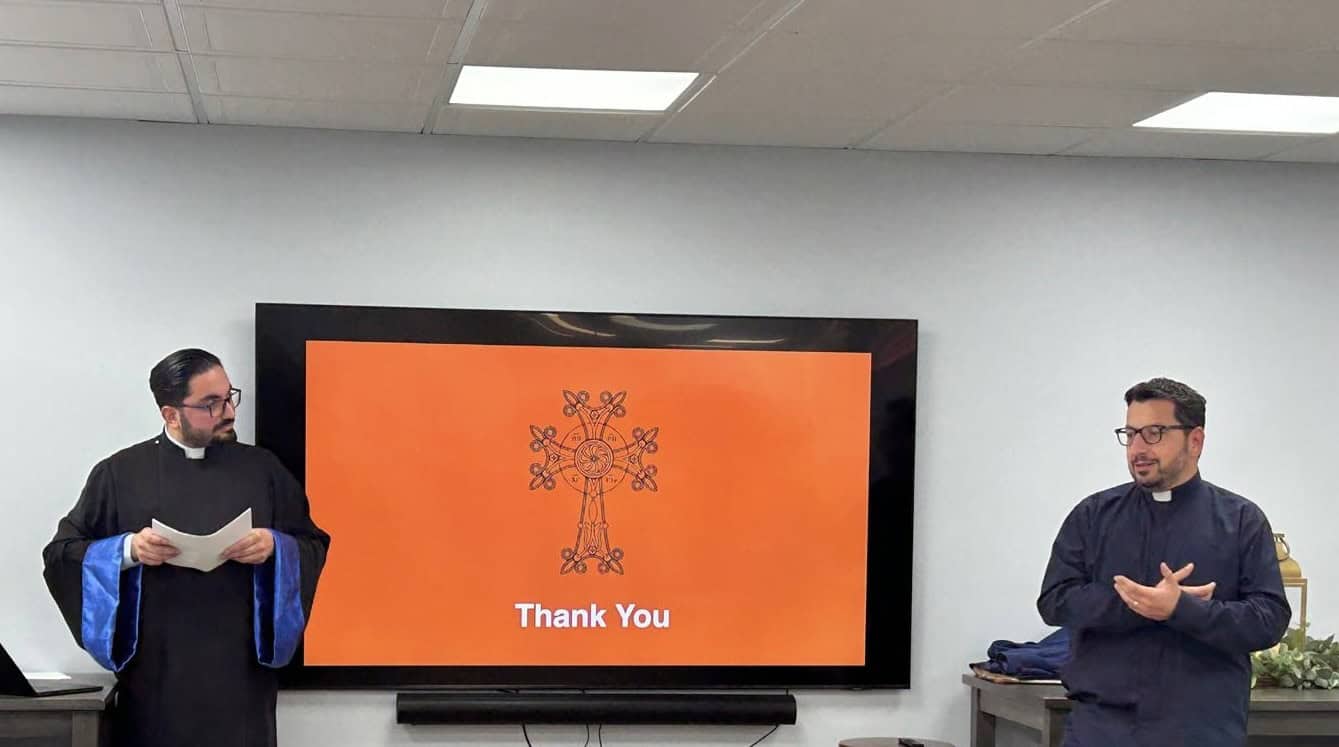
On Tuesday, October 28, Pagoumian Hall was filled with parishioners attending the second lecture on the Nicene Creed. The evening’s guest lecturer, Very Rev. Fr. Boghos Tinkjian, pastor of St. Gregory the Illuminator Church in Philadelphia, delivered a presentation entitled “And We Believe in One Lord Jesus Christ.”
Fr. Boghos brought pastoral warmth and theological depth to his lecture on the central portion of the Nicene Creed. This part of the Creed, he explained, is not only the longest but also the theological heart, as it affirms the divine and human natures of Christ. “The Christology of the Nicene Creed,” said Fr. Boghos, “is the core of the whole Creed; it is the truth upon which the Christian faith stands.”
Tracing the Creed’s origins to the Council of Nicaea (325 AD), Fr. Boghos explained how the early Church Fathers gathered to confront the Arian controversy, the teaching that Christ was a created being rather than fully divine. In response, the Church affirmed that the Son is “of one substance (homoousios) with the Father.” This declaration, he emphasized, preserves the truth of the Christian faith: that Jesus Christ is both fully God and fully man, eternal and uncreated. He reminded the audience that the Nicene Creed was not written in isolation. “Each phrase,” he said, “was chosen carefully to correct false teachings.”
In conclusion, Fr. Boghos invited the audience to move beyond reciting the Creed as a mere liturgical routine and to live it as a personal confession of faith. Quoting St. Gregory of Narek, he ended with words that captured the spirit of the evening:“You, the uncreated, entered the created, not in semblance but in truth, that you might raise the dust of our nature to the light of divinity.”
The series will conclude with a final presentation by Fr. Nareg on the concluding articles of the Creed.