

News
Birth of Nazaret Daghavarian (December 25, 1862)

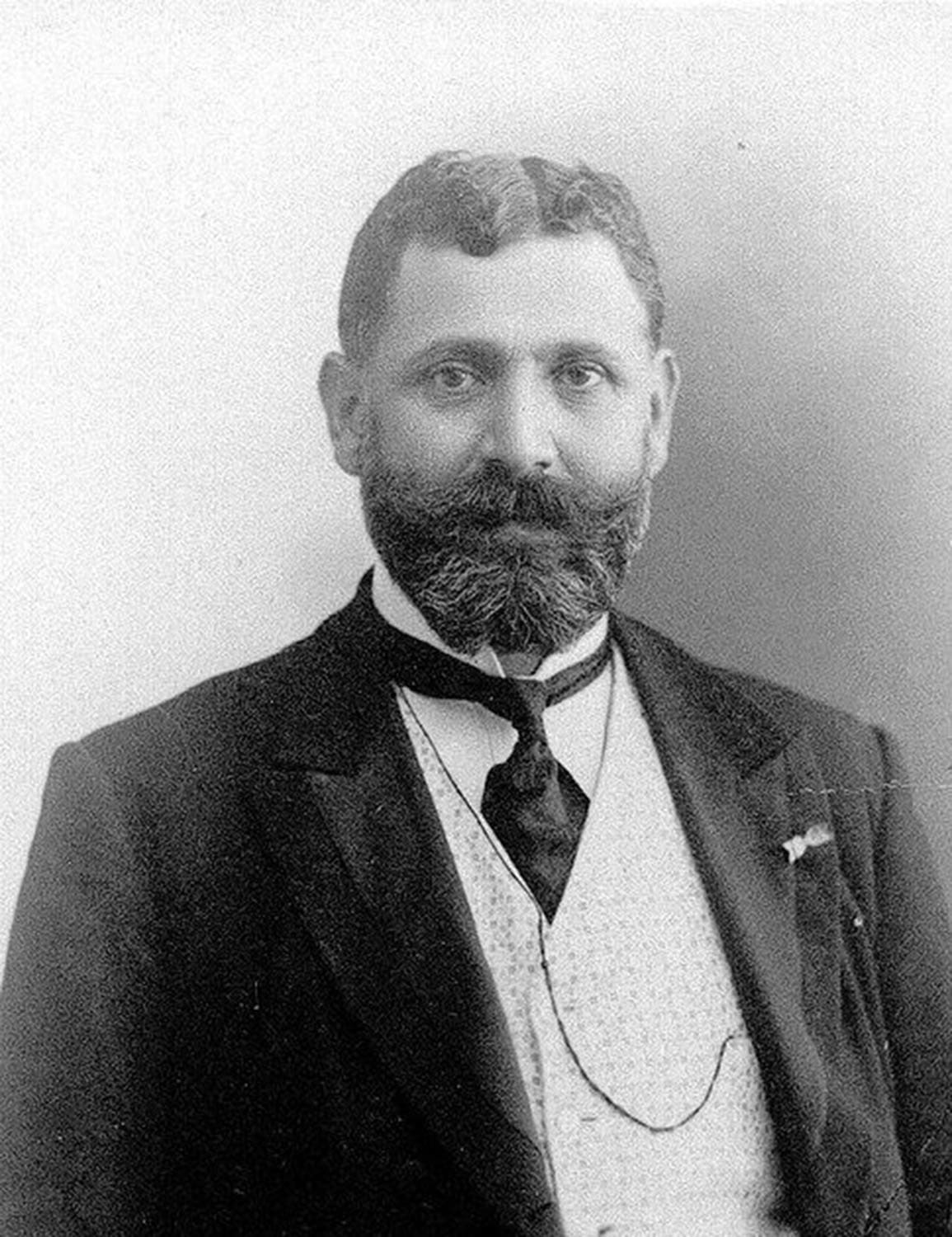
Nazaret Daghavarian was a prolific scientist and scholar, as well as public figure who became one of the first victims of the Armenian Genocide.
He was born Nazaret Chaderjian on December 25, 1862, in Sepastia (Sivas). He moved to Constantinople, where he studied at Armenian schools in the neighborhoods of Scutari and Galata. He studied and graduated from agricultural schools in Paris (1879–1883). After a short stint at the Ottoman Ministry of Agriculture in 1883, he returned to Sepastia, where he was director of the Armenian schools of the province and introduced reforms to their educational system. His progressive views, however, were not welcomed by the local conservative authorities and the Armenian clergy, and as a result he returned to Constantinople.
In 1885-1886 Daghavarian was principal of the Aramian School in the Ottoman capital and turned it into an exemplary educational establishment in a short time. In 1885, he participated in the founding of Kidagan Sharzhum, the first Armenian journal of natural sciences. In 1887, to avoid persecution, he left the educational field and moved first to Cairo and then to France. He studied at the University of Paris in 1887-1893. He graduated from the department of natural sciences in 1891 and earned his medical degree in 1893. In 1892, he trained at the Pasteur Institute.
After graduation, Daghavarian returned to Constantinople, where he opened a clinic. In 1896, he was arrested for his political activities and released four months later thanks to a general amnesty. In 1897, he joined the staff of the French hospital of Holy Savior as a physician. He was arrested again in 1900, but released following the intervention of the French embassy. In 1905, he moved to Cairo, where he worked as a doctor and teacher and participated in the founding of the Armenian General Benevolent Union (AGBU) in 1906. Two years later, after the Ottoman Revolution, he returned to Constantinople and was elected to the Ottoman Parliament as a representative from Sepastia, as well as a member of the Armenian National Assembly. He worked for the municipality of Constantinople in 1912-1913 and visited the Caucasus to establish AGBU chapters in 1914.
Daghavarian’s interest in the promotion of science led him to the publication of various books and booklets, such as Natural History (1886), Bacteriology (1898), Home Health and for Secondary Schools (1898), Darwinism (1901), The Universe and Its Composition (1902), Human Anatomy and Physiology (1910), Health for Elementary Schools (1912), et cetera. His scientific interests were matched by his interest in Armenian history and culture. He published Origin of the Armenian Letters (1895), The Armenian Ancient Religions (1903, 1909), Outline of Armenian History from the Beginnings until the Arshakuni Dynasty (1908), etcetera.
He was among those arrested in Constantinople on April 24, 1915, and exiled to Ayas. On May 5, he was dispatched to Diyarbekir along with other public figures (E. Aknuni, Garegin Khajak, Sarkis Minassian, Rupen Zartarian, and Harutiun Jangulian), escorted by a military guard to purportedly face a court-martial and killed on the way.