

News
Birth of Perch Proshian (June 3, 1837)

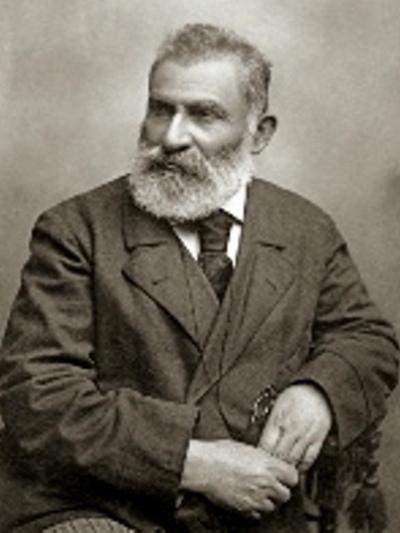
Perch Proshian was one of the pioneering names in the Eastern Armenian novel of the nineteenth century.
He was born Hovhannes Ter-Arakelian on June 3, 1837, in a tailor’s family in Ashtarak. He received his primary education at his hometown’s parish school, at the monastic school of Mughni (1849–52), and, briefly, at public schools in Yerevan. He graduated in 1856 from the Nersisian School of Tiflis (Tbilisi). After studying for a year at Tiflis’ state gymnasium, Proshian returned to Ashtarak in 1857 and was appointed inspector of the parish school. He also acted as the secretary of a local church official.
In 1859, Proshian went to Tiflis and taught a preparatory class at the Nersisian School. He actively participated in the founding of the Armenian professional theater and in the establishment of girls’ schools in Tiflis, Shushi, Agulis, Astrakhan, and elsewhere. He worked as a teacher in different parts of the South Caucasus and drafted school charters. In 1879, he was invited to Etchmiadzin and was appointed inspector of the Armenian parochial schools run by the dioceses of Yerevan and Kars until 1881. He translated a Gospel from Classical to Modern Armenian, for which Catholicos Gevorg IV awarded him the title of Master of Theology. He returned to Tiflis in 1887 and died in Baku on November 23, 1907, but was buried in the Khojivank Armenian cemetery of Tiflis.
Proshian’s first literary work was published in 1859. His notable works include the romance Sos and Varditer (1860); the play Aghasi (1863), written on the theme of Khachatur Abovian’s novel Wounds of Armenia; the patriotic historical novels Apple of Discord (1878) and The Beginning of Birth Pangs (1892), and the realist novels The Bread Issue (1880) and Moths (1889). He also translated foreign language works into Armenian, including Charles Dickens’ David Copperfield and Leo Tolstoy’s Childhood and Boyhood.
The Perch Proshian House-Museum, which has an exhibition of more than 2,000 objects, was founded in Ashtarak in 1948.