

News
WORDS FROM THE HEART: THE PRELATE’S CHRISTMAS SERMON

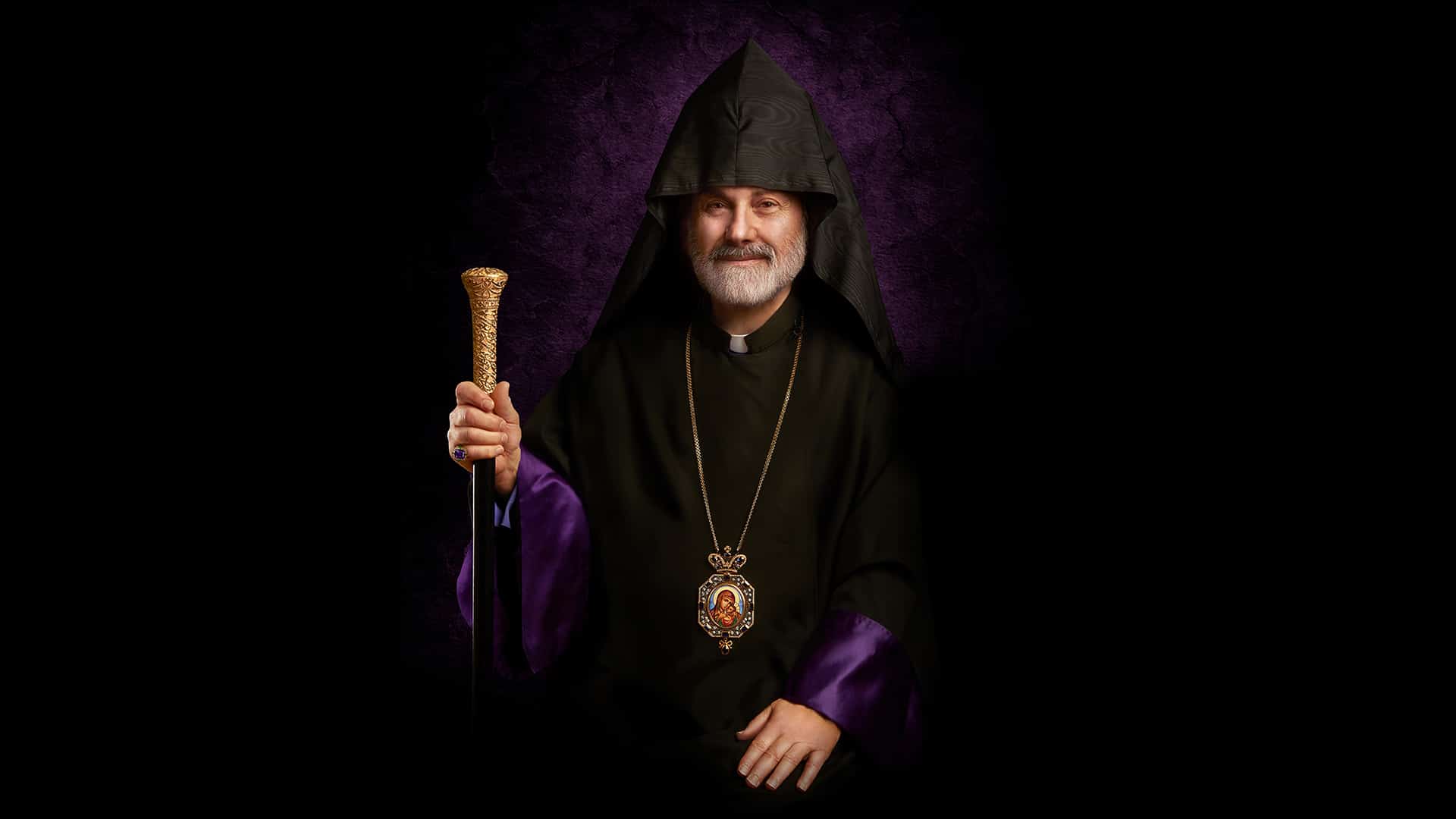
Before my spiritual message, I feel it my duty to convey to the faithful of our Prelacy the fatherly greetings of His Holiness Catholicos Aram I of the Great House of Cilicia. This morning, in the Mother Cathedral of St. Gregory the Illuminator in Antelias, after offering fraternal greetings of love to the enthroned heads of the hierarchical sees of the Armenian Apostolic Church—His Holiness Karekin II, Catholicos of All Armenians, as well as His Beatitude Patriarch Nourhan of Jerusalem and His Beatitude Patriarch Sahag of Constantinople—His Holiness extended his fatherly blessing, through the Prelates, to the beloved daughters and sons of our nation, praying that, through the Feast of the Nativity and Theophany of the Son of God, we may all be renewed in our faith and identity, in both our personal and our collective life.
The mystery of today’s feast invites each of us, with the eyes of our soul, to accompany the shepherds tending their flock in Bethlehem, so that we may partake of the angels’ hymn of praise: “Glory to God in the highest, and on earth peace, goodwill among people” (Lk 2:14).
“Glory to God in the highest.” With these words, the Heavenly Hosts were glorifying God—the Creator, the Source of life, the Provident One—who is beyond the grasp of every human mind, and who, from before time and unto eternity, is glorified for the very essence and active power of His boundless love by countless fiery spirits.
“Glory to God in the highest, and on earth peace,” because He revealed His supreme love in the manger, so that heavenly peace might also be spread upon the earth. It is that peace He promised to all His beloved, saying: “Peace I leave with you; my peace I give to you. I do not give to you as the world gives” (Jn 14:27). A peace that keeps a person or a community unshaken, because it stands higher even than threats of death.
“Glory to God in the highest… goodwill among people.” Indeed, just as the Incarnation of the Son of God restored the vertical bond between God and humanity—shattered by the Evil One’s design and by sin—so too, under the guidance of the Holy Spirit, it restored on the right path the horizontal, brotherly relationship broken in an Abel-and-Cain manner.
This is the very message proclaimed by the angels, received also by the Armenians among other nations, through Sandukht; the virgins Hripsime and Gayane; Gregory the Illuminator; Sahak and Mesrop; and countless martyrs and saints. And weaving this message into their daily life, with each day opening to light and goodness, the Armenian faithful sang, “Morning of light, Sun of righteousness, let light dawn upon me.” The Armenian peasant in the field sang the peaceful song of the “Horovel” with his ox. Sheltered beneath the gentle light of a candle, the Scribe and the Miniaturist breathed life into dead skin, the parchment. In winter winds or summer heat, the stone-carver gave life to lifeless stone by shaping the Khachkar, the cross-stone, a proclamation of God’s love. In short, the Armenian spread life, peace, and goodness on each day granted by God, even when the world served him the dregs of persecution, murder, and genocide.
Today, once again, as we gather with renewed faith and hope to implore peace for the whole world, our hearts and minds turn to our troubled homeland. After the unspeakable losses of the past five years, in recent months we have witnessed unprecedented upheavals—programs concealed beneath slogans are being pushed with a clear, singular agenda: to reform the Armenian Church. Meanwhile, tragically, the soil of the homeland—hallowed daily by the blood of martyrs—is being eaten away like as if it were by cancer.
There is no doubt that such a proposal would be welcome, if it were offered in the God-centered spirit of holy devotion, “‘Zeal for your house will consume me” (John 2:17). There is no objection to such an idea because reform is the key to health, growth, and progress in any institution, be it Armenian or not, ecclesiastical or secular. Indeed, the imperative of reform is felt not only within the Armenian sphere, but also in the Universal Church, the Body of Christ made up by Catholic, Orthodox, or even the churches traditionally called Protestant, not to mention the innumerable religious factions that have branched out of the latter.
To reform first presupposes being reformed, as our Lord Jesus said: “How can you say to your neighbour, ‘Let me take the speck out of your eye,’ while the log is in your own eye?” (Mt 7:4).
Reform is imperative not only for the Church, but also for states, which are accountable to God for the authority they have assumed. Especially our homeland’s government which, cloaked in the guise of democracy, is driving the machinery of the state towards the abyss and, in the manner of worms, slither and thrive in the very mire they faulted the previous rulers for. And what can one say of Parliament, where the people’s voice has been extinguished, and of the courts, where justice has been completely ousted.
How commendable it is that a “map of reform” has already been prepared. Yet any Armenian who hears this announcement has the right to ask when—with the same zeal—will a map be announced for:
a.The liberation of Armenian prisoners wasting away in the prisons of Baku;
b. the restoration of 120,000 displaced Armenians of Artsakh to possession of their ancestral lands;
c. The return of Armenia’s borders, inherited in 2018, to their lawful lines.
Worthy of respect are all leaders—whether ecclesiastical or secular—who do not hide behind slogans. Those who can appear before the public without a mask, and those who, just as they demand transparency from their subordinates, present themselves with equal transparency; and who, for whatever reasons, do not sell their soul to the devil.
I humbly kiss the hand which, free of self-justification and any inferiority complex, upholds not unilateral, but mutual interests.
I kneel before the feet of the one who—rather than organizing marches from church to church and seeks to divide, sowing the seeds of discontent and hatred among ecclesiastical and lay circles in the homeland and the Diaspora—stands instead in a dark corner of a church, beneath a pillar, beating his chest and saying: “God, be merciful to me, a sinner.” Such a person is praised not only by people but by God, who reads minds and hearts, and whose leadership becomes a blessing both to their own people and to neighboring nations.
Indeed, praiseworthy are all leaders who serve selflessly and, with calls for unity and cooperation, strengthen the foundations of a strong and prosperous statehood. Woe, however, to those who—just as the serpent in the Garden of Eden, with the promise of life, doomed our forefathers—mix the poison of death into the cup of life, and lead the remnant of the Armenians saved from Genocide towards division, downfall, and death. The answer to such calls is the
This is why the Armenian Church has been, is, and will remain the incessant bell tower of justice, peace, solidarity, and prosperity. Therefore, renouncing the shameful and clamorous words and declarations of every kind that have until now sown division, unbecoming of Armenians; and heeding the continuing calls to vigilance and prudence of His Holiness Catholicos Aram I of the Great House of Cilicia, let us, as sensible daughters and sons of our nation, seek the path of dialogue and mutual understanding rather than cross talking, so that we do not accuse one another with empty chatter and annul each other.
Let us walk the road that, through self-examination and self-correction, leads us to a reformed Church, a reformed statehood, and a reformed people, so that we remain worthy of the calling of being the first Christian nation. Otherwise, in the Lord’s words: “So the last will be first, and the first will be last” (Mt 20:16).
ARCHBISHOP ANOUSHAVAN
Prelate
St. Illuminator’s Cathedral
January 6, 2026