
News
CATHOLICOS ARAM I AND POPE LEO XIV ADVANCE ECUMENICAL RELATIONS AT THE VATICAN

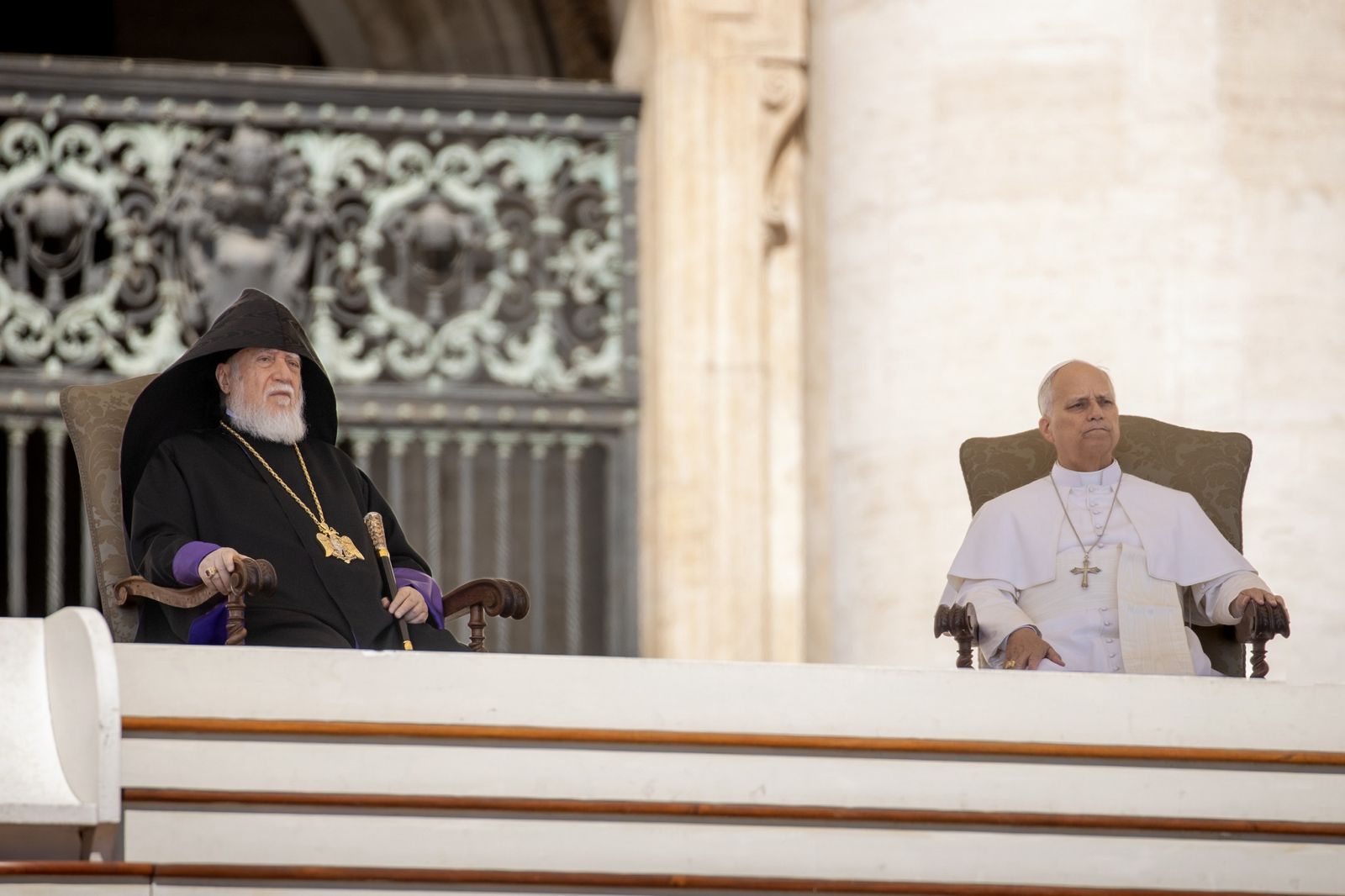
Following his historic visit to the Vatican on May 17–21, His Holiness Catholicos Aram I expressed his gratitude to His Holiness Pope Leo XIV for the warm welcome and the progress made in ecumenical relations.
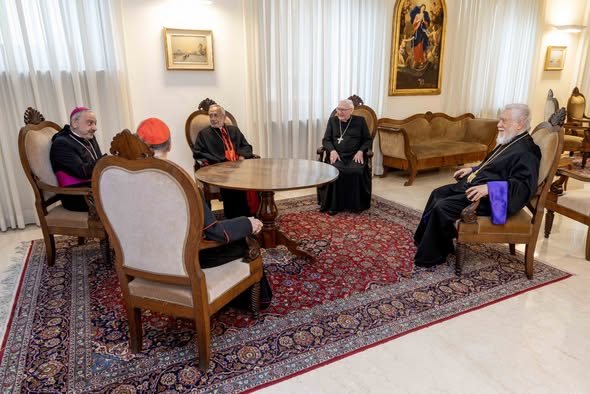
“As I conclude my visitation program to the Vatican, I would like to express my warm thanks and profound gratitude to His Holiness for granting me a private audience, which gave us the opportunity to exchange perspectives and concerns pertaining to issues of common concern. My special thanks are also due to His Eminences Cardinal Parolin, Cardinal Koch, Cardinal Gugerotti, and Cardinal Koovakad for the interesting and fruitful discussions that we had regarding ecumenical and inter-religious matters, as well as issues related to Lebanon, Artsakh, and the Middle East.
The core of our discussions was how we can enhance and expand our bilateral relations and collaboration. It is important, as we look back, to remind ourselves of our long-standing relations; it is equally important to look forward to exploring together new ways of collaboration, and thus we can move forward in our common ecumenical journey.
The Holy See of Cilicia, with its spirit of openness, broadmindedness, and dialogue, has always been ecumenical. Ecumenism is no longer an option in the world today; it is a must. Likewise, intra-religious dialogue is no longer a luxury; it is a necessity. With this spirit and commitment, we will continue our ecumenical journey, considering the visible unity of the Church as the ultimate goal of the ecumenical movement, and peaceful and harmonious co-existence among religions as the very purpose of inter-faith dialogue and collaboration.”
The Vatican
20 May 2026
A New Phase
His Eminence Archbishop Nareg Alemezian, Director of the Ecumenical Department at the Holy See of Cilicia, has offered an assessment of His Holiness’ official visit to the Vatican and the meetings between the two Church leaders. His article, published on the Catholicosate’s website, begins by citing Psalm 133:1: “How good and pleasant it is when brothers dwell together in unity.”
The piece highlights the historic visit of the late Catholicos Khoren I of the Great House of Cilicia, who, 59 years ago, in 1967, visited the Vatican and met with the late Pope Paul VI, thus becoming the first head of an Oriental Orthodox Church to meet a Pope of Rome. It also mentions that His Holiness Aram I had previously made three official visits to the Vatican and met with three Popes: Pope John Paul II (1997), Pope Benedict XVI (2008), and Pope Francis (2014).
In his article, Archbishop Nareg mentions that ecumenical relations have entered a new phase of breadth and depth under the pontificate of Catholicos Aram I.
This was acknowledged by Pope Leo XIV. “Your Holiness stands out for your tireless ecumenical zeal, both locally, as one of the founders of the Middle East Council of Churches, and internationally within the World Council of Churches, where you have held prominent positions,” the Pope told the Catholicos during the private meeting and the public audience.
For his part, His Holiness first emphasized the historic relations existing between the Armenian Church and the Vatican, which acquired broader dimensions during the period of the Cilician Kingdom after the 11th century. He then highlighted the local, regional, and international ecumenical engagement of Antelias, and on this occasion gave special emphasis to the official theological dialogue between the Catholic Church and the Oriental Orthodox Churches, as well as to the close relations between the Armenian Church and the Catholic Church. He also referred to the cordial relations existing between the Catholicosate of the Great House of Cilicia, the Armenian Catholic Church, and the Armenian Evangelical Church.
His Holiness further broadened the ecumenical horizon by proposing that Easter be celebrated jointly every year on a common fixed date, that an annual “Day of the Martyrs” be established in memory of those who were martyred for the Christian faith, and that a Third Vatican Council be convened in response to the urgent contemporary needs of Christian life in light of the common challenges faced by the Churches.
Ecumenical cooperation between the Catholic Church and the Armenian Church was further highlighted when, on the occasion of the visit of the Catholicos, the Pope announced for the first time that St. Nerses Shnorhali, as a champion of ecumenical relations, had been included in the Roman Martyrology of the Catholic Church, and that henceforth his memory would be commemorated every year on August 13.
From Inter-religious Dialogue to Cooperation
In the sphere of inter-religious dialogue, especially regarding Christian-Muslim relations, the Catholicosate has for many years maintained active participation, exercised leadership, and gained experience as a bridge-builder.
At the Vatican, both during his meetings and in the lecture he delivered at the Pontifical Oriental Institute, His Holiness emphasized that Christian-Muslim relations constitute a “dialogue of life” throughout the world, and especially in the Middle East, and he called for inter-religious dialogue to be transformed into practical cooperation.
His Holiness also stated that our Holy See has organized numerous international, regional, and local conferences, consultations, and encounters dedicated to interreligious dialogue and cooperation, and that our people have lived harmoniously alongside Islam for many centuries and continue to do so, especially in the Middle East.

Support for Middle East Christians
Particularly during his meetings with His Holiness the Pope and with Cardinal Pietro Parolin, the Vatican Secretary of State, the Catholicos presented a comprehensive picture of the centuries-old Christian presence in the Middle East and outlined the expectations that the Churches of the region have from the Vatican as support for their witness.
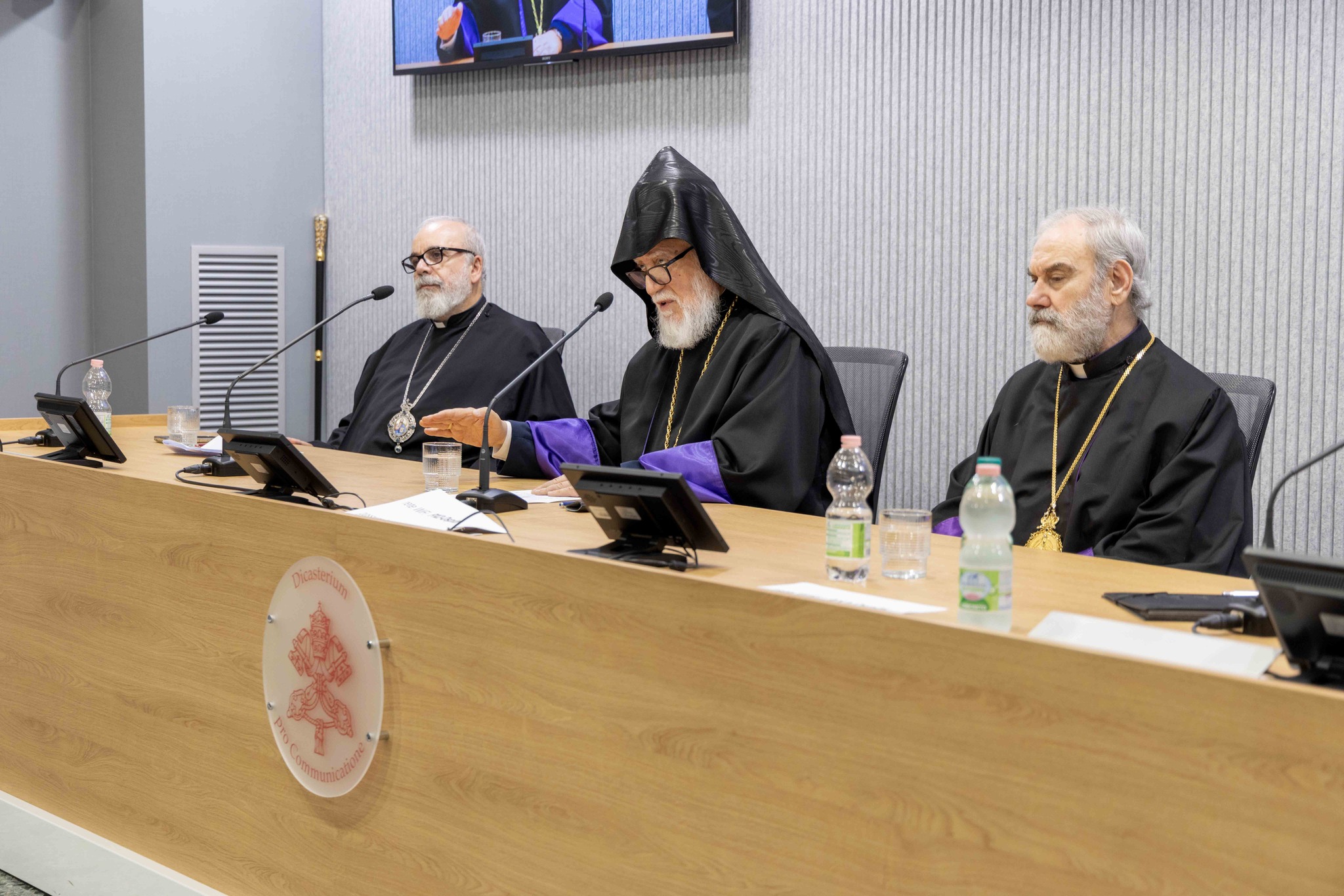
In his lecture, delivered under the title “The Challenges Facing the Churches of the Middle East,” His Holiness recalled that Christians are an indigenous component of the region and highlighted their contributions in various fields, especially in education and charitable service. He affirmed that despite waves of emigration, Christians will continue to remain in the birthplace of Christianity.
His Holiness called upon the Churches of the Middle East to strengthen their cooperation further; upon the political authorities of the Middle East to provide their Christian citizens with greater opportunities to participate actively in the common life of their countries; upon Western nations to express their support concretely for the Churches of the region; and upon the diasporan communities of the Churches to demonstrate their faithfulness in practical ways to their Mother Churches and homelands.
His Holiness also stressed the importance of protecting Lebanon’s sovereignty and peace.
The Pope underlined the importance of Lebanon, too, for Christian-Muslim coexistence, reaffirming the Vatican’s continued solidarity with the country and its people, exhorting: “Let us also pray for peace in Lebanon and the Middle East, once again torn apart by violence and war.”
The Right of Return to Artsakh
During all his meetings, Catholicos Aram I addressed the issue of Artsakh and emphasized the right of return of the Armenians of Artsakh to their historical land under international guarantees, the protection of the Armenian churches and cultural and historical sites according to international law, and the immediate release of the Armenian community leaders detained in Baku, Azerbaijan. He described all these as the rightful demands of the Armenian Church and people.
His Holiness once again reminded Vatican officials that the accusations directed against Artsakh and the Armenian Church during the conference organized by Azerbaijan about a year earlier at the Pontifical Gregorian University have not been forgotten by Armenians.
He again stressed that academic institutions must adopt an objective approach regarding the issues discussed within their walls.
The Vatican promised to give the necessary attention to the concerns raised by His Holiness and to stand in support of the just demands of the Armenian people for the preservation of their religious and cultural identity and heritage.
Recognition of the Armenian Genocide
 Linking the issue of Artsakh with the recognition of the Armenian Genocide and the restoration of Armenian rights, Catholicos Aram I expressed his deep gratitude to the Pope and to Vatican officials for their continuous support on international platforms regarding the recognition of the Armenian Genocide and the restoration of the rights of the Armenian people.
His Holiness recalled that Armenian demands constitute a worldwide Armenian struggle for the restoration of justice, and that all Armenians are voluntary soldiers in this cause until the full recovery of our rights.
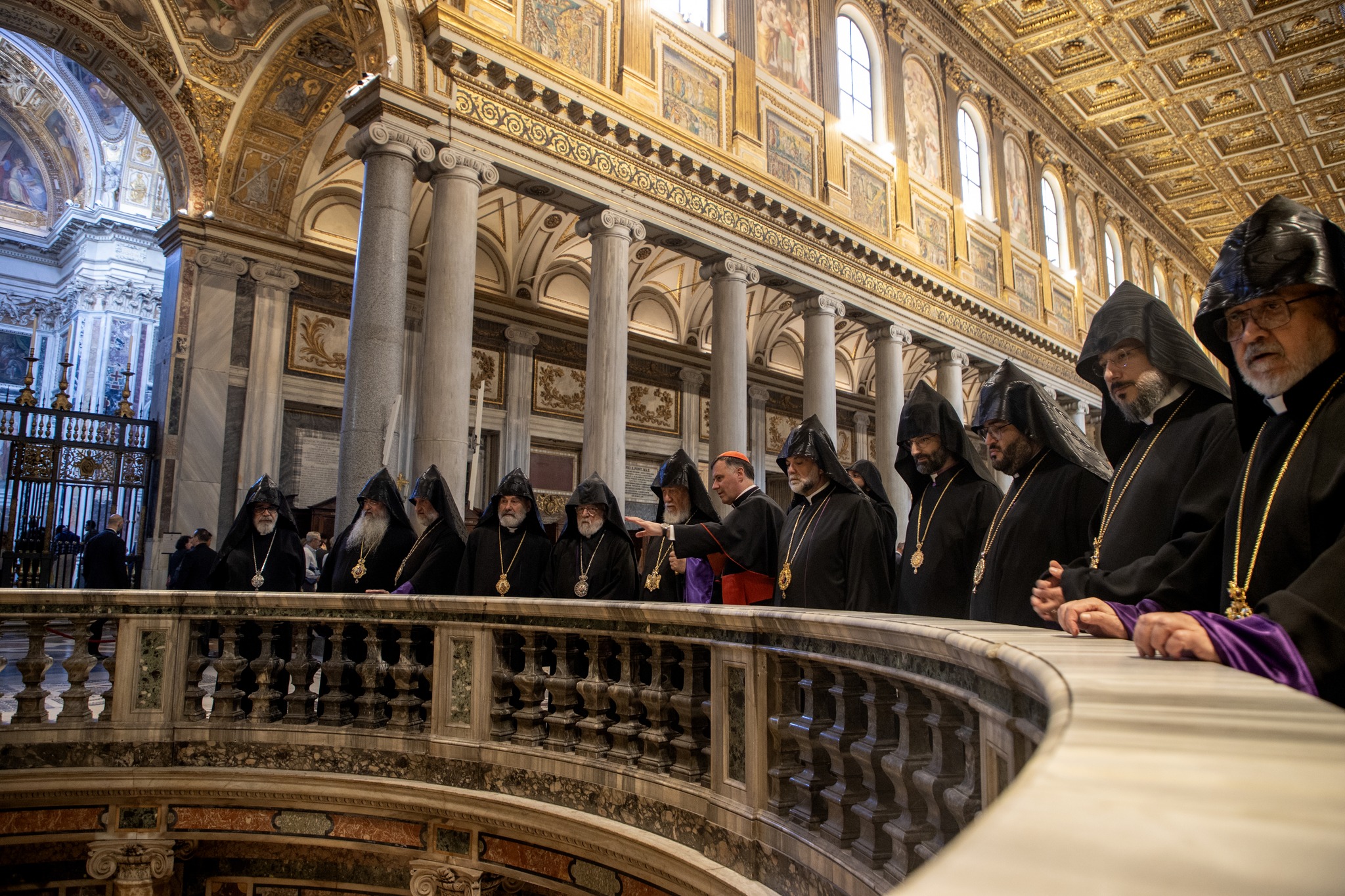
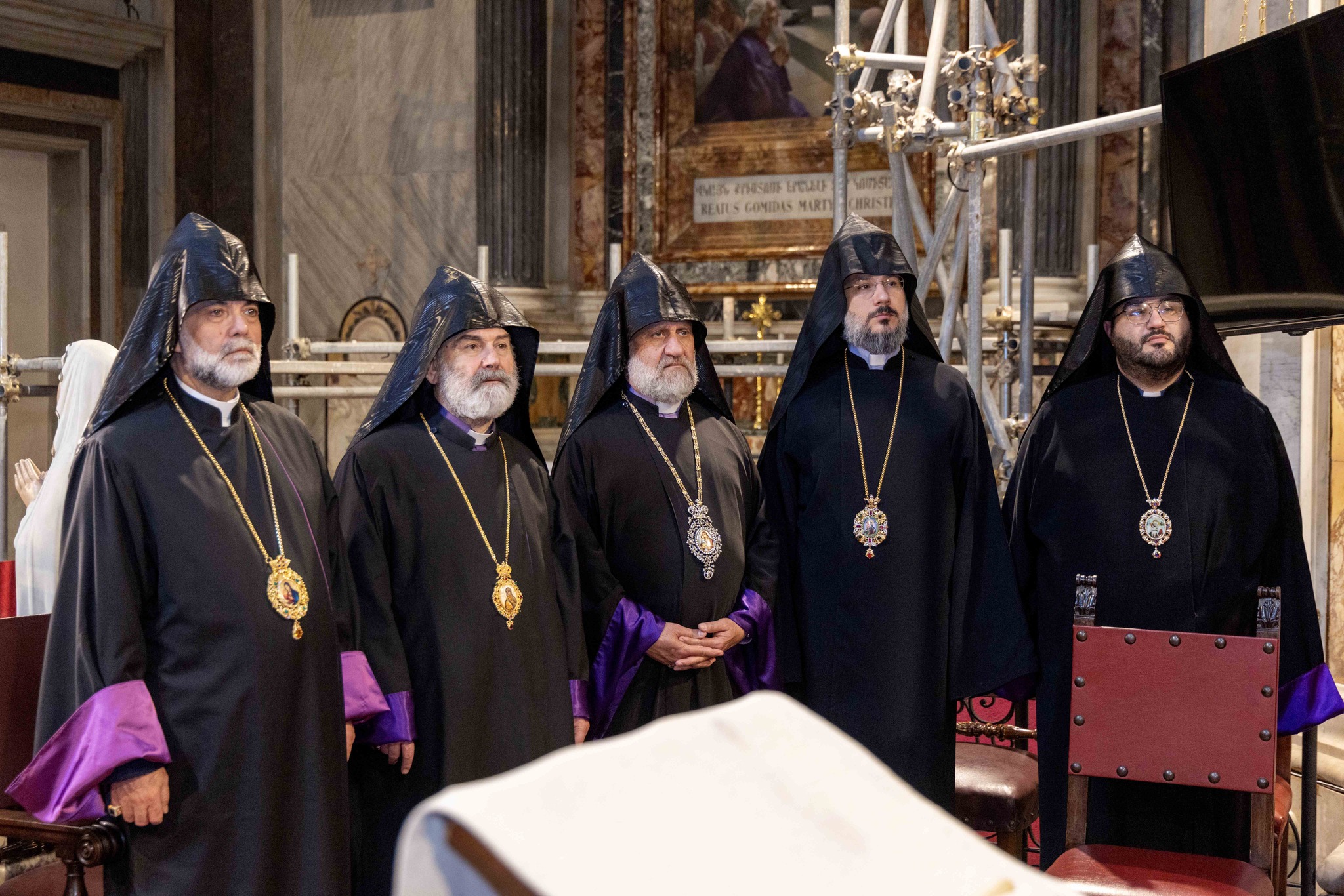
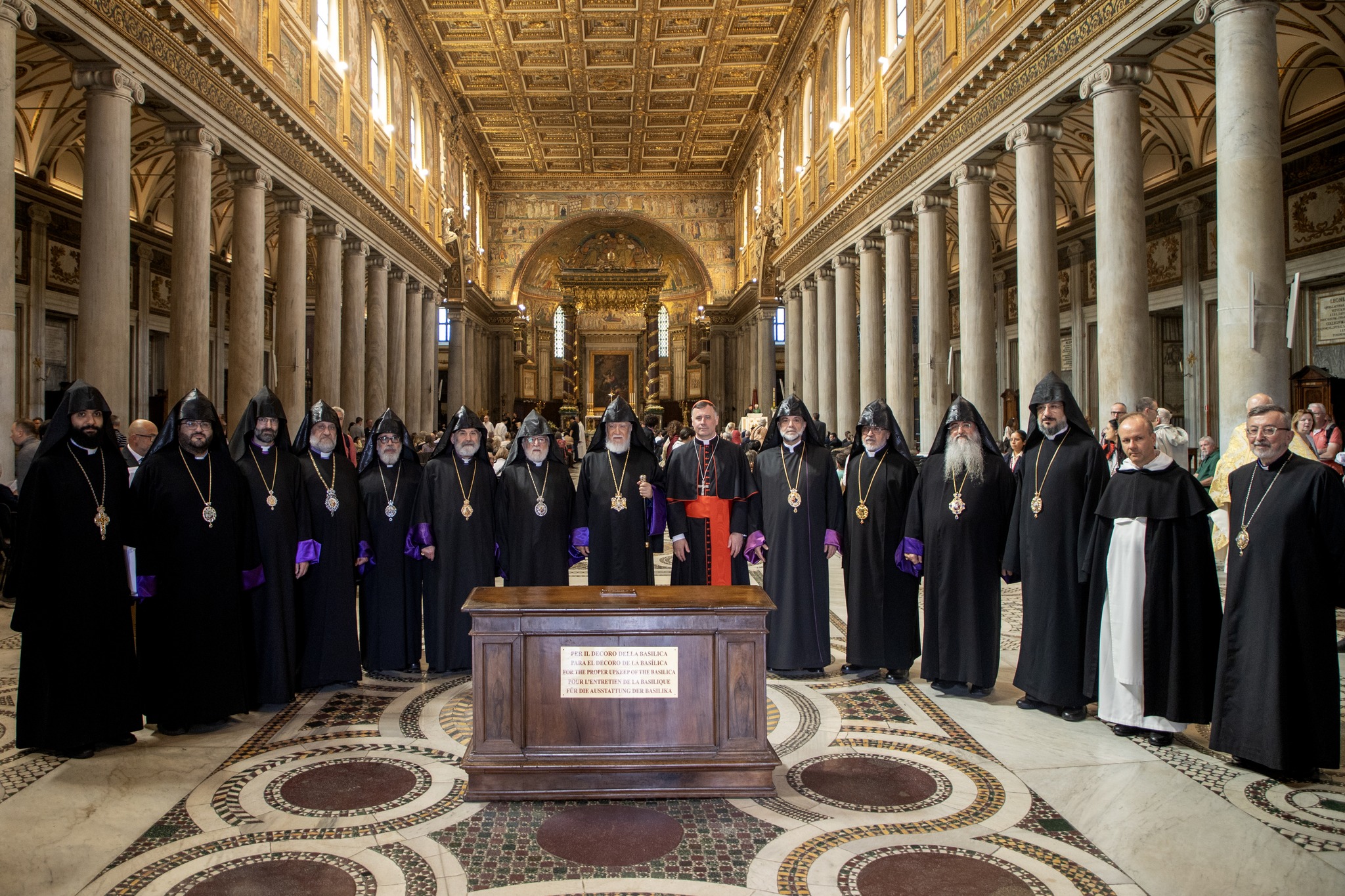
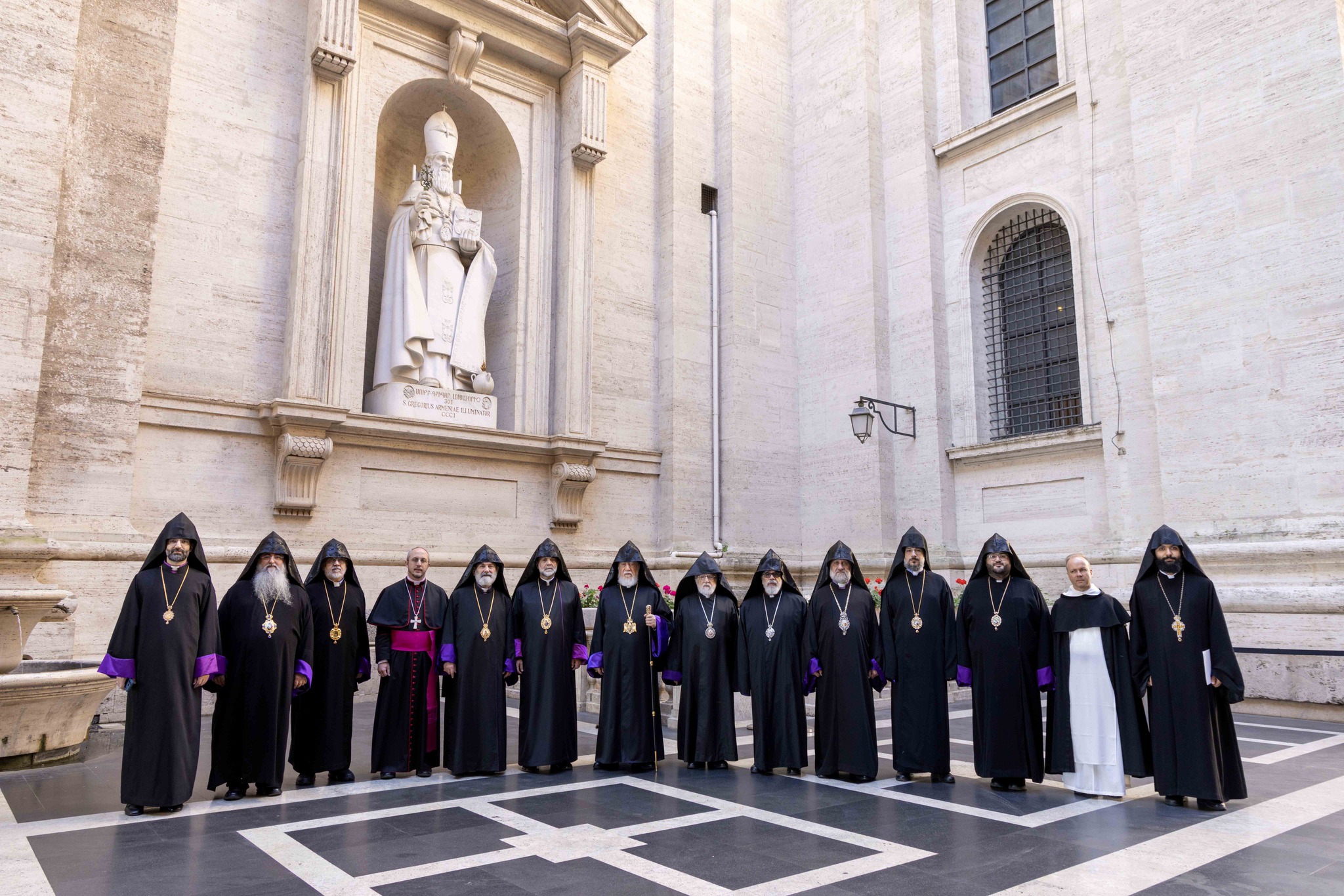
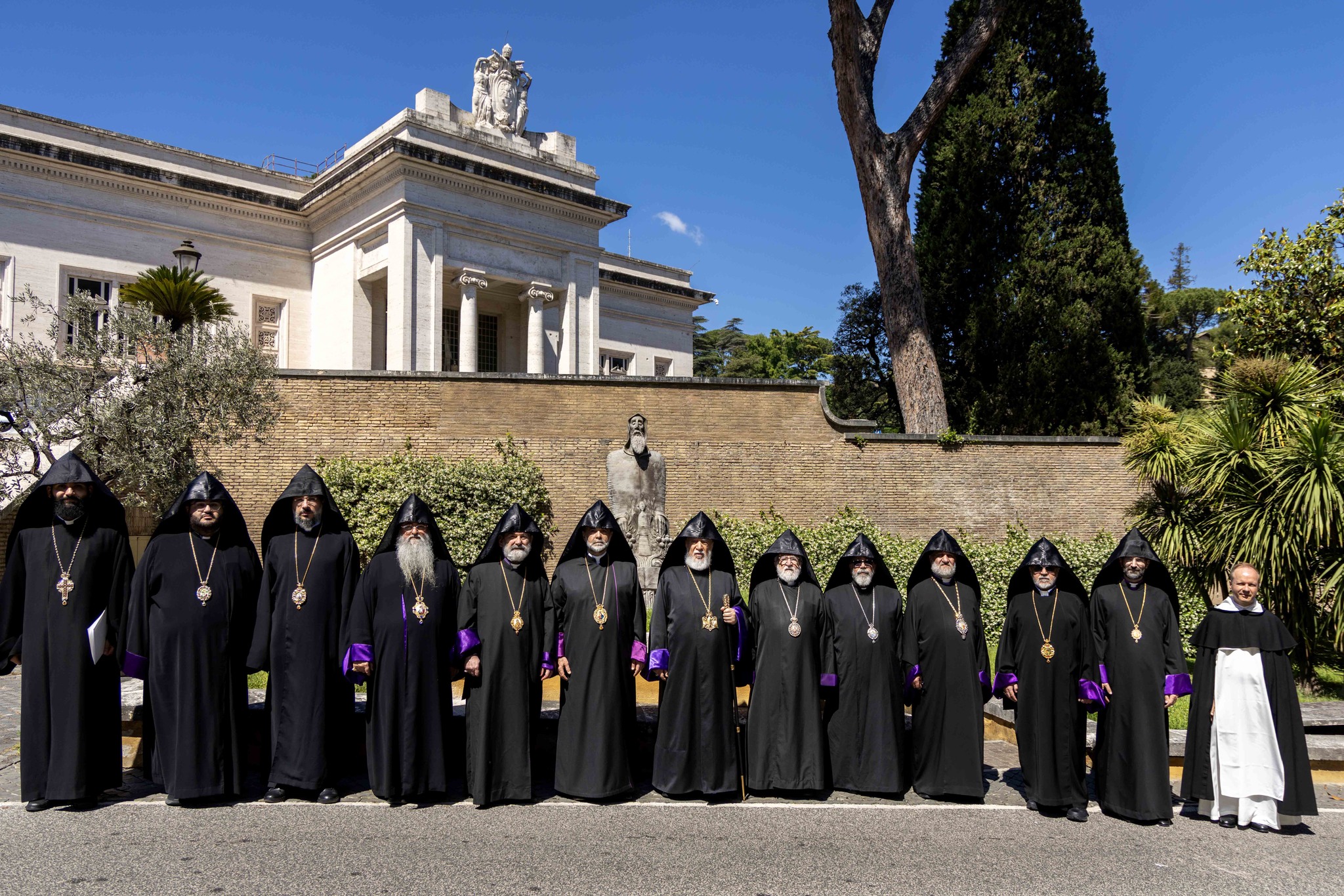
It is also worth adding that ecclesiastical ceremonies took place in the Chapel of Pope Urban VIII in the Apostolic Palace and during the public audience. Prayers were also offered to God near the statues of St. Gregory the Illuminator and St. Gregory of Narek, as well as in St. Peter’s Basilica and the Church of St. Nicholas at the Pontifical Armenian Levonian College.
Furthermore, former officials from various Vatican departments visited His Holiness and held consultations concerning ecumenical matters in general and the relations between the Catholicosate of the Great House of Cilicia and the Vatican in particular. The newly appointed Vatican ambassador to Lebanon also visited His Holiness at the official guest residence where he was staying.
In turn, Catholicos Aram I and his delegation visited the Embassy of Armenia to the Vatican, where they were received by the ambassador and embassy staff.
The visit was therefore a significant step forward in the relations and cooperation between the Catholic Church and the Armenian Church—the Catholicosate of the Great House of Cilicia, inspired by Christian love and mutual respect. On the platform of St. Peter’s Square, the Holy Father and His Holiness, in the spirit of the words, “Behold, I and the children whom God has given me” (Isaiah 8:18), blessed the large gathering of faithful and bid one another farewell with a brotherly embrace of love.
Meetings with Cardinals

In addition to Cardinal Parolin, Catholicos Aram I also met with Cardinal George Koovakad, the Prefect for Interreligious Relations. This encounter built upon previous discussions between the two leaders, which began last summer in Kazakhstan, further deepening their ongoing dialogue on interreligious affairs.
A meeting with Cardinal Kurt Koch, Prefect of the Dicastery for Promoting Christian Unity, was particularly productive, as Crossroads reported last week. During his private meeting with Cardinal Claudio Gugerotti, Prefect of the Dicastery for the Eastern Catholic Churches, Catholicos Aram I raised the issue of Artsakh and stressed the importance of the release of the Armenian prisoners. Cardinal Gugerotti, an expert in Armenian history and the Armenian Church, is well-informed on the situation and, having visited Azerbaijan, shared updates with His Holiness.
On the closing evening of his visit to the Vatican, Wednesday, May 20, 2026, His Holiness Catholicos Aram I hosted a dinner at the Vatican’s Santa Marta residence in honor of senior Vatican officials.
The dinner offered an invaluable opportunity for meaningful and heartfelt dialogue regarding the broader ecumenical movement, with special emphasis on the relationship between the Holy See of Cilicia and the Catholic Church.