

News
Death of Hrand Nazariantz (January 25, 1962)

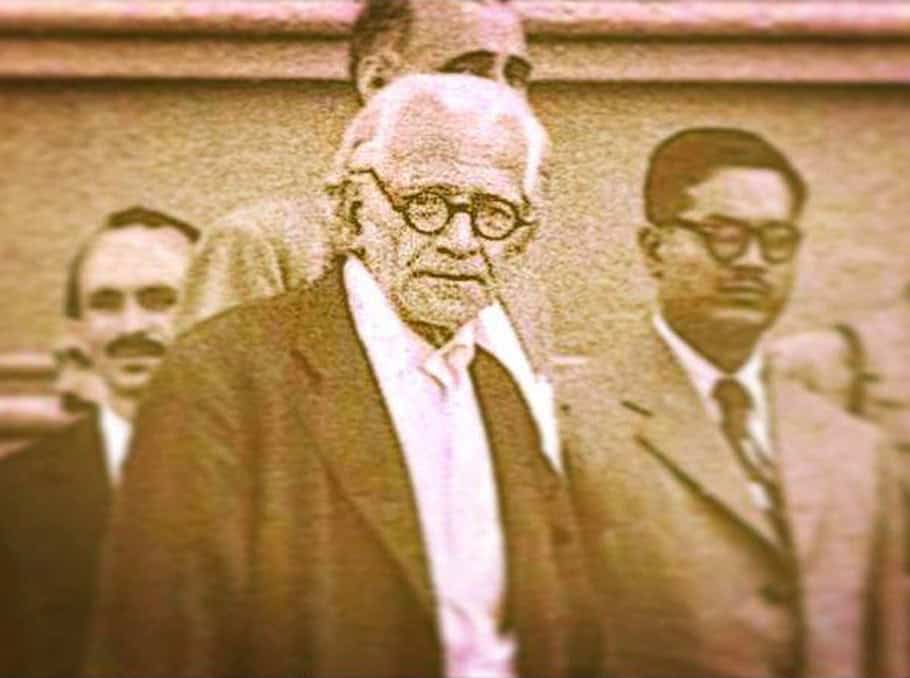
Hrand Nazariantz was an Armenian poet born in Constantinople who spent most of his life in Italy, and was later put forward as a candidate for the Nobel Prize in Literature.
Nazariantz was born in the district of Scutari (Constantinople) on January 8, 1886. His father, Diran Nazariantz, was a businessman and a member of the Armenian National Assembly. He attended the Berberian College from 1898 to 1902. In 1902, he went to London to complete his education. He later studied at the University of Paris from 1905 to 1907, when he returned to Constantinople to take over the management of the family business because of his father’s illness. He was already a contributor to the Armenian press and had started writing poetry.
In 1908, he published the newspaper Surhantag with Dikran Zaven, and in 1909 the weekly Nor Hosank in collaboration with Karekin Gozikian. In 1910, he published an essay in Armenian, “F. T. Marinetti and Futurism,” as well as volumes of correspondence of two deceased poets, Yeghia Demirjibashian and Heranush Arshagian. He translated extensively Italian avant-garde poetry and essays. He also published a slim volume, Tasso and His Armenian Translators (1912), and notably his only volume of poetry in Armenian, Crucified Dreams (1912).
He married Italian singer Maddalena de Cosmis and left Constantinople for Bari (Italy) in early 1913. He lived in that Italian city for the rest of his life.
Upon his arrival in Italy, he taught French and English in Bari and deepened his contacts with Italian writers. He published several volumes of his poetry, translated into Italian by Enrico Cardile: Crucified Dreams (1916), The Mirror (1920), Vahakn (1920), Three Poems (1924), and The Great Song of the Cosmic Tragedy (1946 and 1948). He also wrote in Italian and published his last volume in that language, The Return of the Poem and Other Poems (1952). He continued writing and publishing in Armenian until the end of the 1930s but did not publish any other book. His poetry was translated into Spanish and Catalan.
Nazariantz also published several volumes in Italian about Armenia and Armenian culture: Bedros Tourian, Armenian Poet (1915), Armenia, Her Martyrdom and Her Revindications (1916), The Troubadours of Armenian in Their Life and Their Songs (1916), Arshak Chobanian (1917), and The Art of Armenia (1924). He was particularly active in the promotion of the Armenian Cause and Armenian culture in the 1910s and 1920s.
In 1924, he helped settle a group of Armenian emigrants in the Bari countryside, contributing to the establishment of the village of Nor Arax, a community that produced carpets and lace for many years.
In 1953, a number of Italian and foreign intellectuals proposed Nazariantz’s candidacy for the Nobel Prize in Literature, which that year was awarded to Winston Churchill.
He lived in a very precarious financial situation in his last years and died on January 25, 1962, in Bari, where he is buried. A street in the city bears his name.